
Affiliated Faculty

- Teona Williams
- Email:
This email address is being protected from spambots. You need JavaScript enabled to view it. - Title: ASSISTANT PROFESSOR
- Research Interests: Black geographies, Black feminism, African American and environmental history, Black Ecologies, critical food studies, critical disaster studies, the Black South(s), and rural geographies
- Degrees: (Ph.D., Yale University)
- ENVS Courses Taught: Environment, Society, and Justice; Readings in Black Geographies; Writing Black and Indigenous Environmental Histories.
Biography:
Teona Williams is a Black feminist historian and Assistant Professor of Geography, and co-director of the Black Ecologies Lab at Rutgers University. A daughter of the Black South, her work is shaped by intimate histories of land, loss, and survival across rural and urban landscapes. Her family’s roots trace to Rocky Mount, North Carolina, where her great-grandparents purchased the former cotton plantation on which their ancestors had been enslaved—an act of Black worldmaking forged in the afterlives of slavery. That land, however, did not remain secure. When rural gentrification reared its familiar violence, her family was forced to permanently relocate to Washington, D.C., marking the first of two displacements that would profoundly shape her intellectual and political commitments. At twelve, she experienced displacement again, as her neighborhood along what was formerly known as Rhode Island Avenue became one of the early sites of urban gentrification in the city. She comes to this work as a Black feminist historian nurtured by rural and urban Black women cultural workers—women who understood that there was life after death, and who modeled how survival, care, and refusal might be practiced in the ruins of racial capitalism. Her research explores disaster and hunger as central forces shaping Black feminist ecologies in the twentieth century. Drawing from Black geographies, African American and environmental history, and Black feminist theory, she examines how catastrophe has been lived, contested, and reimagined by Black communities from the 1930s through the 1990s. Her current work follows a cadre of rural Black feminists who articulated expansive visions of food sovereignty, overhauled antiblack disaster relief regimes, and fought relentlessly for universal basic income, radical land reform, and food and clean water as fundamental human rights. Across her scholarship, Williams is concerned with how Black women have theorized and practiced worldmaking at what often feels like the end of the world.
Recent Publications:
- Williams, T. (2021). For “Peace, Quiet, and Respect”: Race, Policing, and Land Grabbing on Chicago’s South Side. Antipode, 53(2), 497–523.
- Williams, T. (Lead Author), Keeve, C., Watkins, C., Williams, B., Van Sant, L., Moulton, A. A., & Carney, J. A. (2025). Black Livingness and Insurgent Ecological Politics: Thinking Across Black Geographies/Atlantics/Ecologies. Dialogues in Human Geography.
- Williams, T. (2025). To Archive It Like It Is: Alice Walker’s Autobiography Project and the Preservation of Black Women’s History in the Mississippi Freedom Movement, 1968–1970. Journal of Historical Geography, 90.
- Williams, T. (2025). Islands of Freedom. In Not Just Green, Not Just White: Race, Justice, and Environmental History. (Edited Volume/Book Chapter).
- Williams, T. (2020). The Links between Policing and Environmental Justice. Black Perspectives (African American Intellectual History Society).
- Williams, T., Gonzalez-Cedeño, K., Couvertier Garay, A., & Prince, L. (2025, January 9). A daughter’s love note: Decolonial love across the Greater Caribbean. Black Women Radicals. https://www.blackwomenradicals.com/blog-feed/a-daughters-love-note. Click or tap if you trust this link.https://www.blackwomenradicals.com/blog-feed/a-daughters-love-note
- Williams, T. (2016). Keyword on Black Ecologies. In International Encyclopedia of Geography: People, the Earth, Environment and Society.
Sites:
- Link to Google scholar: https://scholar.google.com/citations?user=EaSY4oMAAAAJ&hl=en.
- Click or tap if you trust this link.https://scholar.google.com/citations?user=EaSY4oMAAAAJ&hl=en
- Link Black Ecologies Lab: https://globalracialjustice.rutgers.edu/Black_Ecologies
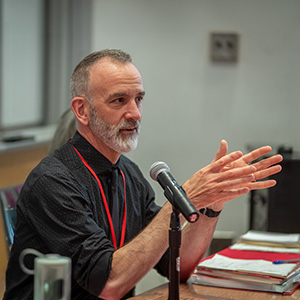
- Kevin St. Martin
- Phone: (848) 445-3634
- Email:
This email address is being protected from spambots. You need JavaScript enabled to view it. - Title: Professor
- Department Chair
- Office: LSH - room B232
- Research Interests: economic geography, diverse economies, political ecology, community and commons, critical cartographies, GIS
- Degrees: (Ph.D., Clark)
My research critically analyses economic and resource management discourse and its capacity to format economy and environment. In particular, it examines where and how marine science and policy are (re)framing ocean space, fishing practices, and coastal communities such that they better align with a capitalist rationality, practice, and economy. While acknowledging this trajectory and critiquing its outcomes, my research also challenges its necessity and foregrounds where and how marine science and policy might be disrupted, reconfigured, and reworked on behalf of community economies and environmental commons. As a result, it amplifies the capacities of, for example, community-based economic initiatives, interdisciplinary science projects, and spatial planning and data development to enact and enhance community and environmental wellbeing (see communityeconomies.org).
Current research projects engage with teams of scientists documenting climate-driven marine environmental change. To these projects I bring a concern for community and environment as enacted through participatory and metrological methods that establish and give meaning to human “communities at sea.” Other recent projects examine new forms of marine governance such as Marine Spatial Planning and foreground the ontological politics of these increasingly global initiatives.\
 My research is funded by grants from national agencies such as the NSF, NOAA, and SeaGrant. I recently edited a volume titled Making Other Worlds Possible: Performing Diverse Economies and I am currently an editor of a book series at the University of Minnesota Press called Diverse Economies and Liveable Worlds.
I am also a contributor to the Centre for Maritime Research (MARE) and an associate editor for its journal Maritime Studies (MAST), and I serve on the advisory board of the Floating Laboratory of Action and Theory at Sea (FLOATS).
Recent Publications:
The "communities at sea" approach:
- St. Martin, K. and J. Olson. 2017. Creating Space for Community in Marine Conservation and Management: Mapping ‘Communities at Sea’, in Conservation in the Anthropocene Ocean, Levin, P. and M. Poe eds. (Elsevier), pp. 123-141.
Relevant to mapping communities and climate change:
- Pinsky, M., E. Fenichel, M. Fogarty, S. Levin, B. McCay, K. St. Martin, R. Selden, T. Young. 2020. Fish and Fisheries in Hot Water: What is Happening and How do We Adapt? Population Ecology doi: 10.1002/1438-390X.12050.
- Rogers, L.A., R. Griffin, T. Young, E. Fuller, K. St.Martin, M.L. Pinsky. 2019. Shifting Habitats Expose Fishing Communities to Risk Under Climate Change. Nature Climate Change 9(7), pp.512+.
- Young, T., E. Fuller, M.M. Provost, K. Coleman, K. St. Martin, B. McCay, M. Pinsky. 2019. Adaptation Strategies of Coastal Fishing Communities as Species Shift Poleward. ICES Journal of Marine Science, 76(1), pp.93-103.
- Dubik, B., E. Clark, T. Young, S.B. Jones Zigler, M. Provost, M. Pinsky, K. St. Martin. 2019. Governing Fisheries in the Face of Change: Social Responses to Long-term Geographic Shifts in a U.S. Fishery. Marine Policy 99: 243-251.
Concerning Marine Spatial Planning and ontological politics:
- Campbell, L., K. St. Martin, L. Fairbanks, N. Boucquey, and S. Wise. 2020. The Portal is the Plan: Governing US Oceans in Regional Assemblages, Maritime Studies doi: 10.1007/s40152-020-00173-3.
- Karnad, D. and K. St. Martin. 2020. Assembling Marine Spatial Planning in the Global South: International Agencies and the Fate of Fishing Communities in India, Maritime Studies doi: 10.1007/s40152-020-00164-4.
- Boucquey, N., L. Fairbanks, K. St. Martin, L. Campbell. 2019. Ocean Data Portals: Performing a New Infrastructure for Oceans Governance. Environment and Planning D: Society and Space 37(3): 484-503.
- Fairbanks, L., L. Campbell, N. Boucquey, K. St. Martin. 2018. Assembling Enclosure: Reading Marine Spatial Planning for Alternatives. Annals of the American Association of Geographers 108:1:144-161.
- Boucquey, N., L. Fairbanks, K. St. Martin, L. Campbell, and B. McCay. 2016. The Ontological Politics of Marine Spatial Planning: (Re)Assembling the Ocean and Shaping the Capacities of ‘Community’ and ‘Environment.’ Geoforum 75: 1-11.
Courses:
Introduction to Geographic Information Systems 01:450:321:01 (02)
Geographic Perspectives 16:450:601:01
Economic Geography: Capitalism and its Others 16:450:513 (Formerly: Rethinking Economy)
Geography, Space, and Social Theory 16:450:607:01
Education:
2000 National Research Council (NRC) Associateship.
1999 Ph.D., Graduate School of Geography, Clark University .
1989 MSc, Geography, University of Massachusetts , Amherst .
1985 BA, Geography, University of Massachusetts , Amherst . Minor: Asian Studies.
Jonah Walters, Tyler Young, Arianna Lindberg, and Sahithya Venkatesan, Divya Karnad, Nathanial Gabriel, Eric Sarmiento, Sean Tanner, Luke Drake, Daniel Danza, and Scott Salmon.
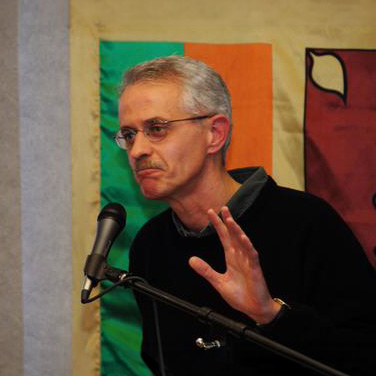
- Kurt Spellmeyer
- Phone: 848-932-7570
- Email:
This email address is being protected from spambots. You need JavaScript enabled to view it. - Title: Professor of English
- Office: Murray Hall, 220
- Research Interests: eco-criticism, environmental literature, the intersections between Buddhism and the environment
- ENVS Courses Taught: Introduction to Environmental Literature
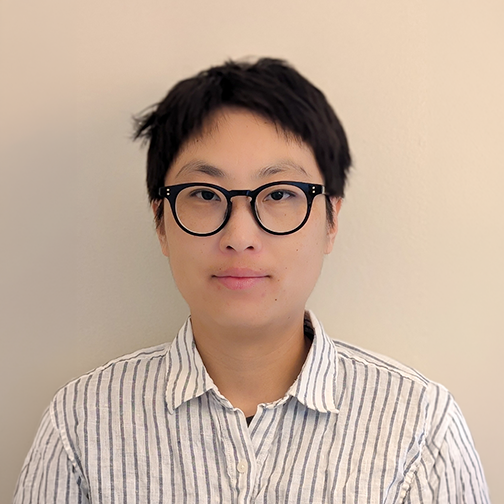
- Lei Song
- Phone: 848-445-4372
- Email:
This email address is being protected from spambots. You need JavaScript enabled to view it. - Title: Assistant Professor
- Office: LSH - room B249
- Research Interests: global environmental change, biodiversity conservation, landscape ecology, terrestrial ecosystems, land cover/land use, remote sensing, geospatial AI
- Degrees: (Ph.D., Clark)
I am a global change geographer who studies how climate and land-use change reshape terrestrial ecosystems, affect biodiversity, and alter interactions between people and wildlife. I integrate remote sensing, GIScience, statistics, and geospatial AI (GeoAI) to map land cover and land use, model species distributions, quantify landscape structure and change, and assess global change impacts. A major goal of my work is to develop scalable, explainable decision-support tools and actionable knowledge that inform conservation and policy decisions and help balance biodiversity and human livelihoods.
- Website
- Google Scholar: Link to Google Scholar
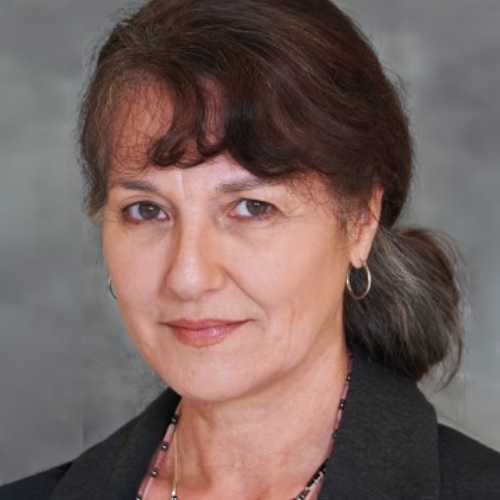
- Genese Sodikoff
- Email:
This email address is being protected from spambots. You need JavaScript enabled to view it. - Title: Associate Professor of Anthropology
- Office: Hill Hall 601
- Research Interests: biotic and cultural extinction, land degradation and zoonosis
- ENVS Courses Taught: Politics of Extinction; Humans, Animals and Society; Environmental Anthropology